
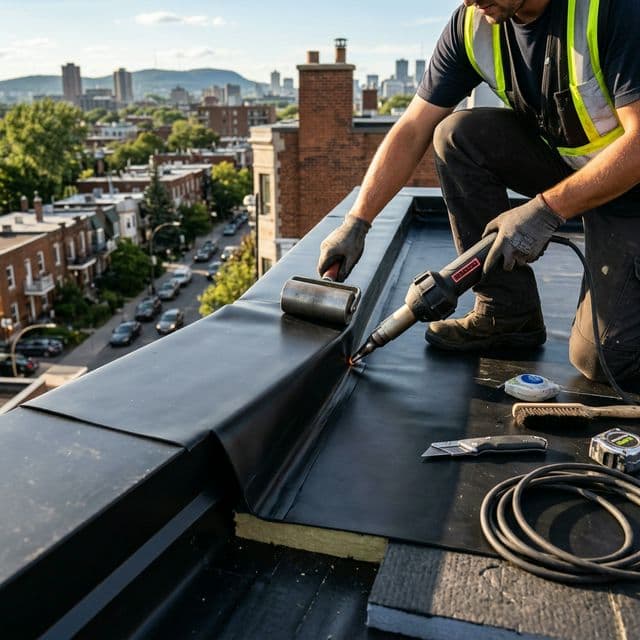
Discover the differences between the elastomeric membrane and the TPO membrane so you can make the best decision for your flat roof in Quebec.
Elastomeric membrane vs TPO: the complete guide
We get asked this at least three times a week: "What's the difference between elastomeric and TPO?" And that's normal — when it's time to redo a flat roof, it's probably THE most important decision you'll make. So we're going to explain it clearly, without unnecessary jargon.
Both options are excellent. But they're made for different situations. It's a bit like choosing between an SUV and a pickup — both are good, but it depends on what you need it to do.
The elastomeric membrane (modified bitumen)
Elastomeric is the classic in Quebec. It's what we install most often on residential flat roofs, and there's a reason for that: it's a proven product that has stood the test of time for decades in our tough climate.
In concrete terms, it's a membrane made of modified bitumen, reinforced with polyester or fibreglass. It's installed in two layers with a torch — a base layer and a cap layer. It's this double layer that gives elastomeric its exceptional durability.
What we love about elastomeric is its flexibility. Even at -30°C, it stays supple and doesn't crack. That's a huge advantage in Quebec when you think about the freeze-thaw cycles we go through every winter. It also stands up very well to impacts — if a branch falls on your roof, it will take the hit without flinching. And if there's ever a problem, repairs are simple and quick.
On the downside, elastomeric is dark in colour, which means it absorbs more heat in the summer. It's also a torch-applied installation, which takes experience and a qualified roofer. Its lifespan is generally 20 to 30 years, depending on maintenance.
The TPO membrane (Thermoplastic Polyolefin)
TPO is the new generation. It's a product that's gaining in popularity, especially for commercial roofs and for owners who want to maximize their building's energy efficiency.
The TPO membrane is white and reflective, which means it bounces the sun's rays back instead of absorbing them. In summer, that can make a real difference on your air-conditioning bill. Some installations are even ENERGY STAR certified.
Installation is done by hot-air welding — no flame, no torch. It's safer, especially for commercial buildings where safety requirements are strict. TPO also resists UV rays, chemicals and aging very well.
The catch? TPO is a little less resistant to punctures than elastomeric. If you have a rooftop terrace that you walk on often, it may not be the best choice. It's also a newer technology in Quebec, so some roofers have less experience with this product.
Our honest recommendation
At Toitures VNC, we have no hidden agenda. We install both products and we'll always recommend the one that makes the most sense for YOUR situation. As a general rule: elastomeric for residential roofs and accessible terraces, TPO for commercial buildings and large surfaces.
Not sure what's right for you? Give us a call. We come out free of charge to assess your roof and give you an honest recommendation. No pressure, no salesperson — just roofers who know their trade.
Need an expert?
Contact Toitures VNC for a free quote and personalized advice for your roofing project.